Benin Overland Travel
The information below concerning Benin is provided for general reference only and may not be totally accurate in a particular location or circumstance. Overland travel conditions can change quickly because of weather, local enforcement, road damage, administrative practice at borders, and wider regional conditions.
The Republic of Benin contains a wide range of cultural and natural highlights and often surprises travelers who cross the country by road. Benin is famous for its traditional Vodun culture, which remains widely practiced across the country. In places such as Grand Popo and other coastal communities, visitors sometimes witness energetic local ceremonies, drumming, and community gatherings that create one of the most memorable cultural experiences in West Africa.
Visiting Benin
Benin is a rewarding country for overland travelers, especially those interested in history, religion, coastal life, wildlife, and regional road travel. Pendjari National Park in the north remains one of the best-known destinations for travelers interested in seeing wildlife such as elephants and lions in West Africa. Travelers heading overland should also consider changing regional security advice and check the latest route conditions before driving north.
Entering Benin with a Car or Motorbike
Benin can be crossed by road, but overland travel requires patience and preparation. With the exception of some of the main paved routes, many roads can be rough, damaged, sandy, or seasonally difficult. The road linking Cotonou in the south to Malanville on the border with Niger is one of the better-known corridors, but road quality still varies. Outside the main corridors, unpaved roads range from manageable to very poor depending on weather and maintenance.
During the rainy season, some dirt roads may become extremely difficult or impassable, especially for heavily loaded motorcycles, low-clearance vehicles, and two-wheel-drive vehicles. Deep sand, potholes, standing water, corrugation, and broken surfaces are common challenges. Four-wheel drive vehicles with spare tires, recovery tools, basic parts, and emergency supplies are strongly recommended for longer overland routes.
Road travel warning: overland travelers should not judge Benin only by the condition of one highway. Route quality can change sharply within a short distance, especially off the main paved network.
Travel Visa for Benin
The Republic of Benin e-Visa is an electronic authorization used for eligible foreign visitors who need permission to enter Benin for tourism, business, or short-stay travel. Since the launch of the eVisa system, Benin has moved short-stay visa planning toward advance online application instead of last-minute visa arrangements at arrival points.
For overland travelers, this matters even more than it does for air travelers. Border journeys often involve longer routes, uncertain timing, and multiple country crossings. Because of that, the safest approach is to travel with the Benin visa issue already settled before you reach the border.
Benin e-Visa Types and validity
- Benin e-Visa Single Entry (30 days): from the entry date indicated on the application form, this type of Benin e-Visa allows the traveler to enter Benin once only and stay up to 30 days maximum.
- Benin e-Visa Multiple Entry (30 days): this type is intended for travelers who may need more than one entry during a 30-day validity period.
- Benin e-Visa Multiple Entry (90 days): this type of Benin multiple-entry visa is valid for 90 days from the date of entry and allows visitors to visit the country multiple times during that period.
For many overland travelers, the choice between single entry and multiple entry matters. A traveler making one direct road entry into Benin and then continuing onward may only need single entry. A traveler moving around the region and expecting to leave Benin and return later may need multiple entry.
Benin Overland Required Paperwork
Vehicle-based travel requires more paperwork than ordinary passenger entry. At a minimum, overland travelers should prepare the following:
- Passport of the registered owner.
- Driver’s license of the registered owner.
- Original vehicle registration.
- Proof of vehicle insurance.
- (Optional) Carnet de Passage.
No copies may be required in every situation, but carrying both originals and backup copies is still a smart precaution for long road journeys.
Benin Overland Process at Border
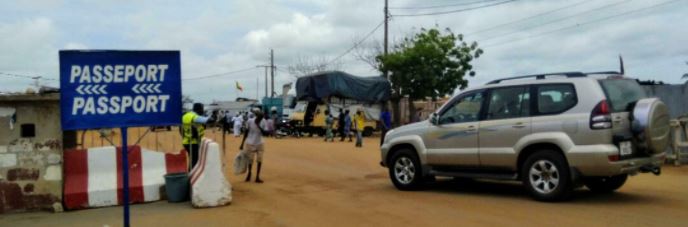
- Get yourself stamped in at immigration.
- Go to customs to request the temporary import procedure for the vehicle.
- Using the vehicle registration, the officer may issue a temporary import pass, often described as a passavant, commonly valid for one month.
- If you have a Carnet de Passage, the border process may be simpler and you may not need the same temporary import document.
Actual border practice can vary by crossing point, officer, and the type of vehicle involved. Overland travelers should remain patient, keep all documents together, and avoid presenting incomplete or inconsistent paperwork.
Benin Overland Vehicle insurance requirements
Liability insurance is an important part of overland travel in Benin and police may ask to see it. Travelers who drive through multiple West African countries often prefer a regional policy such as a Carte Brune if available for their route, because it can simplify roadside checks across several countries.
Benin Overland Cost of vehicle insurance
Expect to pay around CFA10,000 XOF to CFA20,000 XOF per vehicle per month depending on the engine size, vehicle category, and the age of the vehicle. Newer or larger vehicles can cost more.
General Road quality - Benin Overland
Main highways are often in better condition than minor routes, and some recently improved corridors have good pavement. However, even sealed roads can develop severe potholes. Routes closer to the western side of the country and some cross-country links may have rougher stretches. Smaller dirt roads are often heavily corrugated and can become almost impossible during the rainy season.
Always watch out for potholes, washouts, broken edges, and loose surfaces. Hitting a large pothole at speed can damage the suspension, wheels, tires, or steering.
Benin Overland Road Signs
Distances to the next major town are often shown on highways, and some large intersections have signs. That said, overland travelers should not rely only on road signs. A combination of offline mapping, local guidance, and careful route planning remains the safest way to travel.
Benin Overland Toll roads
Tolls appear on some of the larger roads and occasionally on smaller roads as well. Charges can be modest, and travelers should keep local currency ready for road payments.
Checkpoints - Benin Overland
There are many checkpoints and random stops where police or other officials may ask to review travel and vehicle paperwork. Overland travelers should keep passport, visa approval, vehicle registration, insurance, and temporary import documents organized and easy to produce. Calm document handling usually makes the process smoother.
Gas and Diesel Availability / Frequency
Fuel is available in many parts of Benin, including roadside sales and formal stations. Availability and quality vary. Some overland travelers use roadside fuel because it is easy to find, but others prefer formal stations for reliability and fuel quality. If you prefer official stations, fill up whenever you find a good one, particularly on longer interior routes.
Overland planning checklist: passport, Benin eVisa if required, yellow fever certificate, original vehicle registration, driver’s license, insurance proof, emergency tools, spare tires, route plan, and enough local cash for fuel, tolls, and border payments.